A Fleet Manager’s Guide: What Does a Diesel Truck Diagnostic Test Check?
A diesel truck diagnostic test checks far more than stored fault codes. Learn how technicians assess ECM data, emissions systems, sensors, electrical circuits, brakes, transmissions, and active faults before repairs begin.
A warning light can appear while a truck still runs normally, then turn into a derate or roadside failure a few shifts later. The real problem is that a fault code identifies where the truck detected trouble, but it does not always identify the failed component. A thorough diagnostic process narrows the cause before parts get replaced.
For Santa Rosa fleet managers, that distinction can mean less downtime, fewer unnecessary repairs, and better maintenance decisions.
What Does a Diesel Truck Diagnostic Test Check on a Heavy-Duty Truck?
A heavy-duty truck diagnostic test checks electronic control modules, fault codes, operating data, sensors, circuits, and electronically monitored vehicle systems. Depending on the complaint, technicians may also test engine performance, emissions equipment, brakes, and transmission controls.
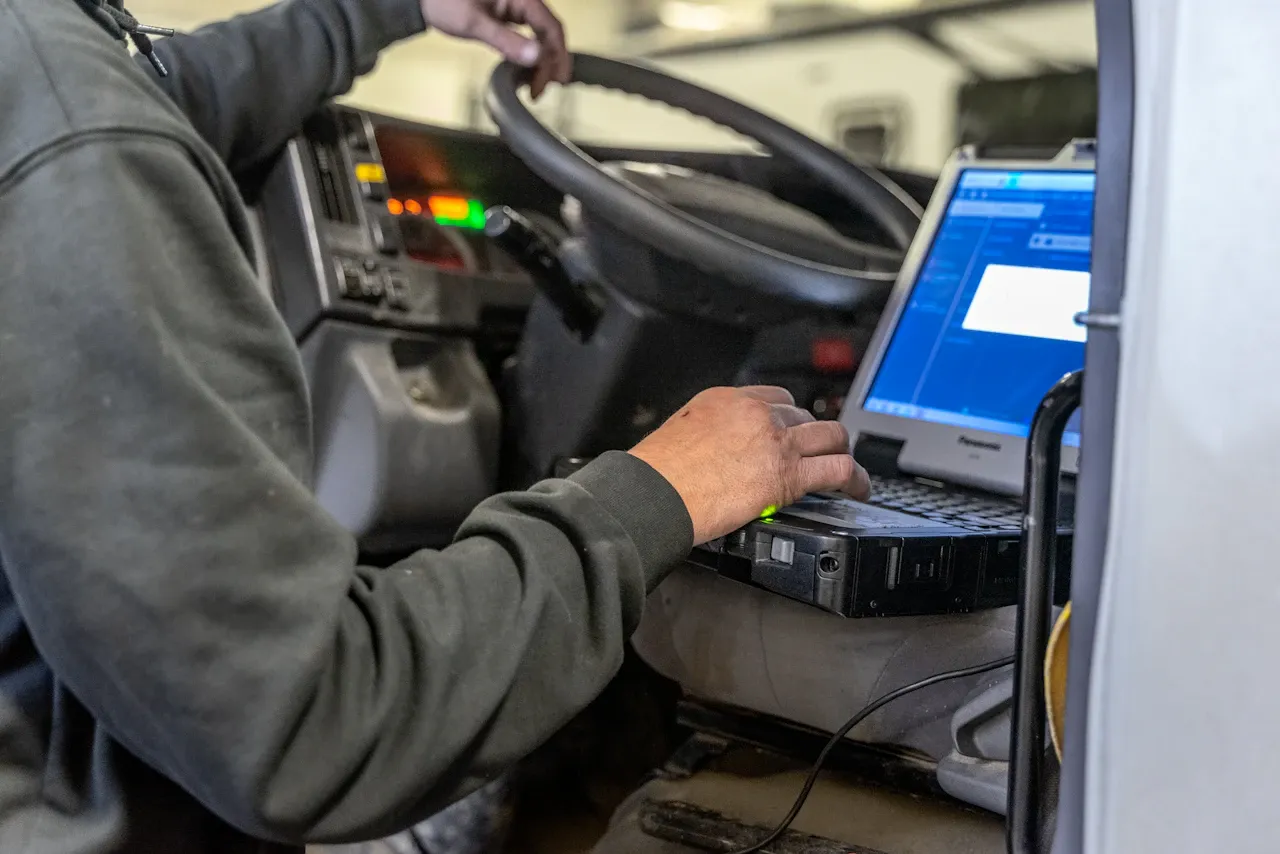
Technicians usually begin with semi-truck computer diagnostics by connecting professional diagnostic equipment to the truck. The software communicates with onboard control modules and retrieves information recorded when the fault occurred.
If your fleet needs troubleshooting beyond a basic code scan, professional diesel diagnostics and electrical repair can help trace faults to their source early in the repair process.
What Do Diesel Truck Diagnostic Codes Tell a Technician?
Diesel truck diagnostic codes point technicians toward systems where the ECM or another control module has detected readings outside an expected range. Heavy-duty trucks commonly report SPN and FMI fault codes, which help identify the affected parameter and the type of failure the module detected.
A code might indicate a circuit voltage problem, sensor signal issue, abnormal pressure reading, or another monitored condition. Resources covering diesel DTC codes can help fleet managers understand how diagnostic trouble codes organize these electronic faults.
Codes still require interpretation. A sensor-related fault, for example, could result from a failed sensor, damaged wiring, poor connector contact, or an actual mechanical condition producing an abnormal reading.
That is why replacing whichever component appears in the fault description can waste time and money.
How Does a Truck ECM Diagnostic Test Go Beyond Reading Codes?
A truck ECM diagnostic test gives technicians access to information collected by the Engine Control Module. Modern heavy-duty diesel engines rely heavily on electronic controls to manage fuel delivery, engine operation, emissions functions, and other monitored systems.
Technicians can compare stored faults with live engine data while the truck idles, operates under load, or performs a commanded test. Readings such as temperatures, pressures, engine speed, voltage, and sensor values help determine whether a problem is currently active.
Historical codes also matter. An intermittent fault may disappear before the truck enters the shop, while stored information provides a trail technicians can follow.
What Systems Can a Diesel Engine Diagnostic Test Evaluate?
A complete diesel engine diagnostic test may involve several systems because one symptom can have multiple possible causes. A loss-of-power complaint, for instance, might originate with engine controls, an emissions fault, electrical supply problems, or another monitored system.
Common diagnostic areas include:
- Engine and ECM operation
- Fuel and air management
- Cooling system sensors
- Charging and starting circuits
- Exhaust aftertreatment systems
- Transmission controls
- Electronic braking controls
- Wiring, connectors, grounds, and power supply
- Network communication between control modules
This broader process is one reason proper truck diagnostics matter before technicians move into major repairs or component replacement.
How Are Sensors and Electrical Systems Tested?
Modern trucks depend on sensors to report operating conditions to their control modules. During sensor testing, technicians compare reported values with expected operating ranges and may test the sensor circuit directly.
Electrical diagnostics can include checking voltage, resistance, power supply, grounds, wiring integrity, and connector condition. A loose terminal or damaged wire can create symptoms that closely resemble a failed electronic component.
Battery and charging performance can also affect diagnostic results. The truck's alternator supplies electricity while the engine runs and recharges the batteries, so unstable electrical supply can cause problems across electronically controlled systems.
Do Diagnostics Check DPF, DEF, and SCR Problems?
Yes. Modern diesel aftertreatment systems use several electronically monitored components, so DPF diagnostics, DEF system diagnostics, and SCR diagnostics often form an important part of troubleshooting emissions-related faults.
The DPF captures particulate matter and uses regeneration to reduce accumulated soot. The SCR system uses Diesel Exhaust Fluid to support the chemical process that reduces nitrogen oxides in the exhaust.
A diagnostic test may review temperatures, pressure readings, DEF-related data, regeneration history, and applicable fault codes. Technicians use those findings to decide what testing should come next instead of assuming the warning light means one specific component has failed.
Can Computer Diagnostics Check Brakes and Transmissions?
Electronic truck systems extend beyond the engine. ABS diagnostics can retrieve braking-system faults involving electronically monitored components, wheel-speed signals, wiring, or communication issues.
Heavy-duty air brakes themselves rely on compressed air rather than hydraulic brake fluid. Their mechanical components can include service chambers, pushrods, slack adjusters, S-cams, brake shoes, and drums.
Transmission diagnostics can also identify electronically monitored shifting, sensor, actuator, or communication problems. Automated manual and automatic transmissions use electronic controls to manage gear operation, making diagnostic software an important first step when a truck develops shifting complaints.
Why Can a Diagnostic Scan Miss the Real Problem?
A scan tool provides information, but diagnosis requires testing. A fault code identifies what the truck's computer noticed, while the technician still needs to determine why that condition occurred.
Intermittent wiring faults are a good example. The code may point toward a sensor circuit even though the sensor works correctly and a damaged connector causes the signal to drop only when vibration moves the harness.
Good check engine light diagnostics combine electronic information with physical inspection and targeted testing. That approach reduces guesswork and helps prevent unnecessary component replacement.
What Should Fleet Managers Ask for After a Diagnostic Test?
Your repair decision becomes easier when the diagnostic findings explain the cause instead of listing codes alone. Ask for enough information to understand what technicians found and what they recommend doing next.
Useful questions include:
- Which fault codes were active, stored, or inactive?
- What testing confirmed the suspected cause?
- Did technicians find wiring or connector problems?
- Are any related faults likely to return?
- Could the issue cause a derate, shutdown, or additional damage?
- Does the truck need immediate repair, or can the work be scheduled?
Clear answers help you prioritize repairs across a fleet and document recurring problems on individual trucks.
Why Accurate Diesel Diagnostics Matter for Santa Rosa Fleets
Truck downtime can disrupt routes quickly, especially for fleets moving freight and equipment throughout Santa Rosa, Sonoma County, and the North Bay. Accurate diagnostics give you better information before you authorize repairs.
The answer to what a diesel truck diagnostic test checks ultimately depends on the truck and its symptoms. A proper test can evaluate control modules, fault codes, operating data, sensors, wiring, emissions systems, braking electronics, and transmission controls to find the source of the complaint.
Get Your Truck Diagnosed in Santa Rosa, CA
If a warning light, performance problem, electrical issue, or recurring fault is affecting your truck, Dynamic Auto and Truck Repair can diagnose the problem and recommend the appropriate next step. Contact the Santa Rosa shop to schedule heavy-duty truck diagnostics for your vehicle or fleet.
What Our Clients Say About Us
I recently had the opportunity to work with Omar from Dynamic, and I was truly impressed. After being taken advantage of by my previous 'mechanic,' who had taken apart my car engine and put it back together incorrectly, Omar quickly identified all the issues and kept me informed throughout the entire process.He fixed all the problems, and now my car is running great! He was both friendly and professional, and the quality of his work was outstanding. I really appreciated his punctuality and reliability. Everything was completed with a high level of professionalism, and the prices were very reasonable for the quality of service I received. I highly recommend Omar to anyone in need of honest and skilled car care.Thank you so much!

Very knowledgeable ,honest and great service . Has worked on multiple vehicles for me and has always done an amazing job . Dont hesitate to reach out for all your car troubles ,you won’t be disappointed. Thank you again for all your hard work !
DynaMic Auto Repair is top notch, Omar is professional, timely, he returns calls, he is a very knowledgeable mechanic. I would recommend him to everyone.
Contact Dynamic Auto & Truck Repair
Based in Santa Rosa, CA, Dynamic Auto & Truck Repair proudly provides trusted mobile truck & commercial fleet repairs throughout Sonoma & Napa County. Get in touch with any questions, to request a quote, and to schedule mobile service.